


Types of Vitiligo: Classification and Clinical Variations
Introduction:
Vitiligo is a chronic skin condition that leads to the gradual loss of skin pigment, resulting in white patches or lighter areas on the body. These patches can appear anywhere on the face, hands, or even inside the mouth. Although vitiligo is not painful or contagious, it can deeply impact self-esteem and emotional health.
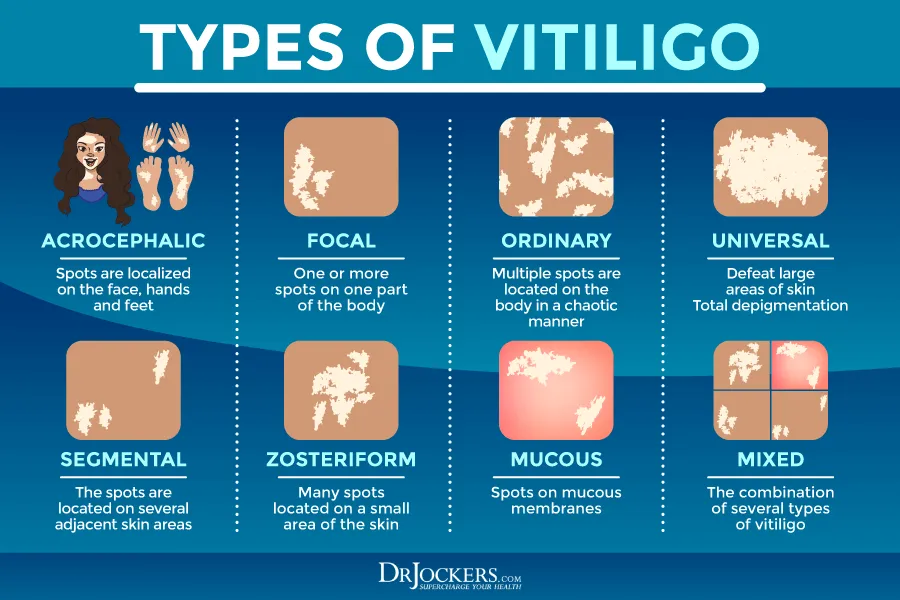
To manage vitiligo effectively, understanding its types is essential. Each type of vitiligo has a distinct pattern, progression rate, and response to treatment. Recognizing these differences helps dermatologists recommend the right therapies and helps patients set realistic expectations.
Why It’s Important to Identify the Types of Vitiligo
Vitiligo classification isn’t just medical it’s practical. Knowing the types of vitiligo helps in:
- Choosing the right treatment (topical, light therapy, or surgical)
- Predicting how quickly the condition may spread
- Providing better psychological and lifestyle guidance
- Supporting ongoing research and awareness efforts
Major Types of Vitiligo
Vitiligo is mainly divided into two broad categories:
Non-Segmental Vitiligo (NSV)
Segmental Vitiligo (SV)
Let’s explore each type and its unique characteristics in detail.
1. Non-Segmental Vitiligo (NSV)
Non-Segmental Vitiligo is the most common type of vitiligo, affecting nearly 90% of all cases. It is characterized by symmetrical white patches appearing on both sides of the body for example, on both hands, knees, or cheeks.
This type progresses slowly and may spread over time. NSV often goes through alternating phases periods of stability followed by sudden flare-ups.
Common Subtypes of Non-Segmental Vitiligo
Here are the key subtypes under NSV:
a. Generalized Vitiligo
The most widespread and well-known form, Generalized Vitiligo causes symmetrical patches across multiple areas like the face, elbows, knees, and hands. It tends to expand over time and is often associated with autoimmune factors.
b. Acrofacial Vitiligo
This Types of Vitiligo targets the fingers, toes, mouth, and eyes. Because it affects highly visible areas, it can have a greater emotional and social impact on individuals.
c. Mucosal Vitiligo
Mucosal Types of Vitiligo affects the mucous membranes, including the lips, mouth, genitals, and rectal area. It may occur independently or along with other types of vitiligo.
d. Focal Vitiligo
Focal Vitiligo appears as one or a few isolated patches in a specific area of the body. It usually remains stable for a long time but can sometimes develop into other types later.
e. Universal Vitiligo
The rarest and most severe subtype, Universal Vitiligo results in widespread pigment loss often affecting more than 80% of the body. In extreme cases, even body hair and mucous membranes lose pigment.
2. Segmental Vitiligo (SV)
Segmental Vitiligo is less common, accounting for around 15–30% of all cases. Unlike NSV, it affects only one side of the body and typically follows a nerve or dermatome pattern meaning the depigmentation often aligns with the area served by specific nerves.
This form usually develops quickly, stabilizes within a few months, and rarely spreads beyond its initial area.
Key Characteristics of Segmental Vitiligo
- Affects only one side of the body (e.g., one arm, leg, or side of the face)
- Progresses rapidly but then stabilizes
- May cause poliosis white hair growth in affected areas
- Often begins in childhood or early teens
- Rarely associated with other autoimmune conditions
3. Mixed Vitiligo
Mixed Vitiligo combines features of both segmental and non-segmental vitiligo. Typically, segmental lesions appear first and are later followed by symmetrical patches on other parts of the body.
Key Features
- Shows both localized and symmetrical depigmentation
- Segmental part often appears first
- Can make treatment planning more complex
- Requires personalized management to address both patterns effectively
4. Unclassified Vitiligo
Sometimes, vitiligo does not clearly fit into any of the major types. Such cases are termed unclassified vitiligo. These may include:
- Stable focal patches that don’t spread
- Multiple asymmetrical spots without a clear pattern
- Pure mucosal depigmentation
Dermatologists often monitor these cases for a period before assigning a specific classification.
5. Rare Variants of Vitiligo
Apart from the main types, there are a few rare clinical patterns worth noting:
Trichrome Vitiligo
Shows three color zones normal skin, hypopigmented skin (light brown), and depigmented white skin. It usually signals active or spreading vitiligo.
Inflammatory Vitiligo
Features red or inflamed borders around depigmented patches, indicating ongoing inflammation or rapid pigment loss.
Confetti Vitiligo
Characterized by tiny, pinpoint white spots scattered close together often an early sign of active disease.
Comparison: Non-Segmental vs. Segmental Vitiligo
| Feature | Non-Segmental Vitiligo (NSV) | Segmental Vitiligo (SV) |
|---|---|---|
| Distribution | Symmetrical, both sides | One side only |
| Progression | Slow and continuous | Rapid, then stable |
| Association | Often autoimmune | Rarely autoimmune |
| Age of Onset | Any age (commonly < 20) | Usually childhood/teenage |
| Treatment Response | Good response to light therapy | Better suited to surgical or localized treatments |
Emotional & Psychological Impact
Vitiligo isn’t just a skin disorder it’s an emotional journey.
People often struggle with confidence, self-image, and public perception. Support groups, therapy, and awareness programs can help individuals embrace their appearance and live confidently. Recognizing the types of vitiligo early also helps patients make informed decisions about their treatment options.
Diagnosis and Management
Accurate diagnosis is crucial to determine the type of vitiligo. Dermatologists use:
- Wood’s lamp examination for identifying depigmented patches
- Skin biopsy in rare cases to rule out other conditions
- Patient history for understanding triggers and disease patterns
Treatment Options
- Topical creams (corticosteroids or calcineurin inhibitors)
- Light therapy (Narrowband UVB)
- Surgical options (for stable segmental vitiligo)
- Natural oils and herbal remedies for skin nourishment
Combination therapy often works best for restoring pigmentation and preventing spread.
Conclusion
Understanding the types of vitiligo helps both patients and dermatologists choose the most effective care plan. From common non-segmental cases to rare mixed or segmental forms, each type behaves differently in appearance, progression, and response to treatment.
Early diagnosis, consistent care, and emotional support make it possible to live confidently with vitiligo. While there’s no permanent cure yet, ongoing research and advanced therapies continue to bring hope for better outcomes.
FAQs About the Types of Vitiligo
1. What is the most common type of vitiligo?
Non-Segmental Vitiligo (NSV) especially the generalized subtype is the most common form.
2. How does Segmental Vitiligo differ?
Segmental Vitiligo affects only one side of the body, progresses quickly, and then stabilizes, unlike NSV which spreads gradually.
3. Can a person have more than one type of vitiligo?
Yes, mixed vitiligo combines both segmental and non-segmental patterns in one individual.
4. Are there rare forms of vitiligo?
Yes trichrome, inflammatory, and confetti vitiligo are rare variants showing unique color patterns.
5. Why is knowing the type important?
It helps choose suitable treatment, manage expectations, and provide emotional and medical support effectively.






Add comment